
Updated:
Originally Published:
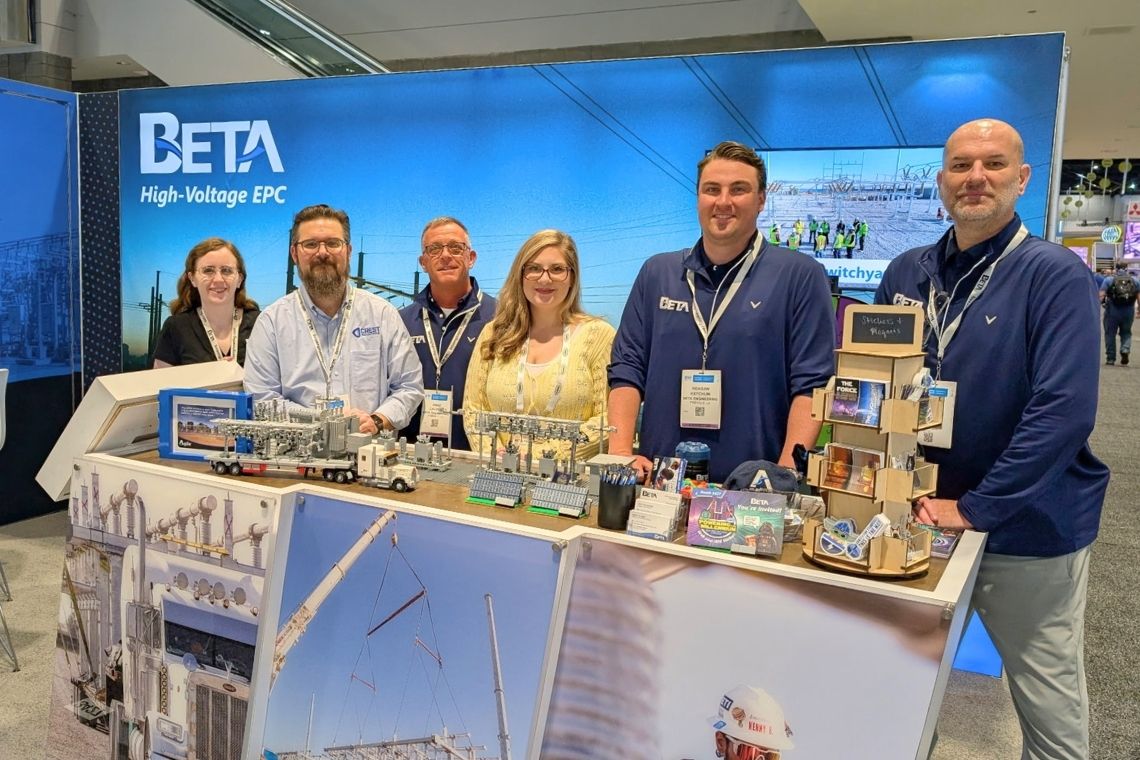
CHICAGO — LEGOs, lightsabers, and Darth Vader drew the crowd Beta Engineering’s booth at IEEE PES T&D 2026, but the conversations happening around them focused on something much bigger:
How do utilities deliver more power, faster, when teams are stretched thin?
That question shaped many of the discussions throughout the week in Chicago, where 15,000+ members of the utility and power grid industry gathered to learn, connect, and problem-solve.
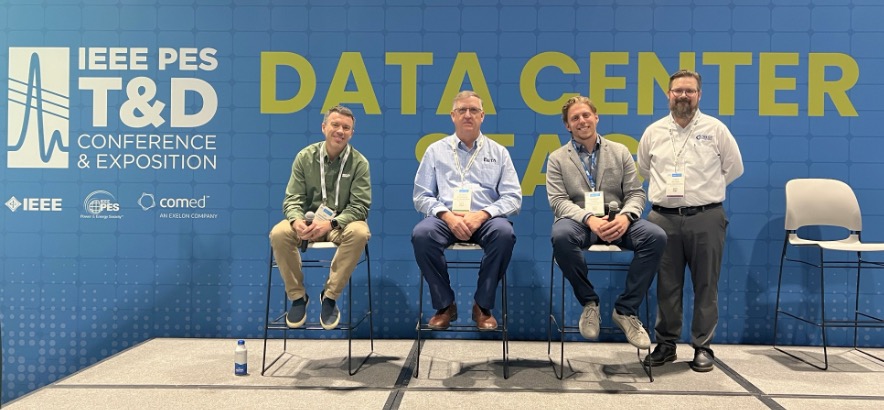
A utility, data center, and substation EPC come together at IEEE PES T&D to talk about what it really takes to tackle the data center boom, together.
A major theme throughout the conversation was partnership—utilities, developers, and substation EPCs working together earlier and staying aligned throughout the process to reduce delays, avoid rework, and keep projects moving forward.
Panelists discussed how geography, available power, land, and network infrastructure are shaping where data centers are being built, along with how different hyperscalers are approaching site selection based on AI training, inferencing, and cloud demands.
But the conversation wasn’t just about load growth. It was also about communities.
Utilities are balancing the data center demands with the long-term needs of their communities. That means looking for serious long-term partners—developers willing to engage early, support permitting efforts, invest in communities, and help reduce unnecessary friction throughout the project lifecycle.
Community impact was another major topic throughout the discussion. While data centers can bring long-term tax revenue, jobs, and investment opportunities, panelists acknowledged the increasing pushback many projects face from local residents concerned about growth and construction impacts.
That makes communication, coordination, and community engagement more important than ever before.
Beta’s LEGO factory-built substation may have caught your eye and brought out your inner child, Substation modules are built in a factory, quality tested, shipped to the site, and installed in hours…not weeks.
Substation modules are built in a factory, quality tested, shipped to the site, and installed in hours…not weeks.
Take a closer look at Factory-Built Substations.
As utilities face tighter footprints and increasing community expectations, GIS substations also create new opportunities to add capacity in dense or highly visible areas while minimizing impact on the surrounding environment.
T&D World’s May cover story is a GIS project Beta built in the middle of a growing city, designed to quietly provide power out of sight.
Watch the hidden substation rise from the ground in the construction timelapse below.
The conversations at IEEE PES T&D highlighted just how quickly the utility landscape is changing. From hyperscale growth to tighter footprints and growing communities, the projects moving forward successfully are the ones built on strong partnerships and early coordination.
Beta Engineering is a substation EPC company headquartered in Pineville, La., with an office in San Diego. For more than 50 years, utilities, renewable developers, and other power delivery companies have trusted Beta Engineering to help design and build the substations and switchyards that keep their systems reliable and ready for what’s next.
Tell us what challenges you’re facing. Let’s solve them together.
Updated:
May 15, 2026
Updated:
Originally Published:
CHICAGO — LEGOs, lightsabers, and Darth Vader drew the crowd Beta Engineering’s booth at IEEE PES T&D 2026, but the conversations happening around them focused on something much bigger:
How do utilities deliver more power, faster, when teams are stretched thin?
That question shaped many of the discussions throughout the week in Chicago, where 15,000+ members of the utility and power grid industry gathered to learn, connect, and problem-solve.
A utility, data center, and substation EPC come together at IEEE PES T&D to talk about what it really takes to tackle the data center boom, together.
A major theme throughout the conversation was partnership—utilities, developers, and substation EPCs working together earlier and staying aligned throughout the process to reduce delays, avoid rework, and keep projects moving forward.
Panelists discussed how geography, available power, land, and network infrastructure are shaping where data centers are being built, along with how different hyperscalers are approaching site selection based on AI training, inferencing, and cloud demands.
But the conversation wasn’t just about load growth. It was also about communities.
Utilities are balancing the data center demands with the long-term needs of their communities. That means looking for serious long-term partners—developers willing to engage early, support permitting efforts, invest in communities, and help reduce unnecessary friction throughout the project lifecycle.
Community impact was another major topic throughout the discussion. While data centers can bring long-term tax revenue, jobs, and investment opportunities, panelists acknowledged the increasing pushback many projects face from local residents concerned about growth and construction impacts.
That makes communication, coordination, and community engagement more important than ever before.
Beta’s LEGO factory-built substation may have caught your eye and brought out your inner child, Substation modules are built in a factory, quality tested, shipped to the site, and installed in hours…not weeks.
Substation modules are built in a factory, quality tested, shipped to the site, and installed in hours…not weeks.
Take a closer look at Factory-Built Substations.
As utilities face tighter footprints and increasing community expectations, GIS substations also create new opportunities to add capacity in dense or highly visible areas while minimizing impact on the surrounding environment.
T&D World’s May cover story is a GIS project Beta built in the middle of a growing city, designed to quietly provide power out of sight.
Watch the hidden substation rise from the ground in the construction timelapse below.
The conversations at IEEE PES T&D highlighted just how quickly the utility landscape is changing. From hyperscale growth to tighter footprints and growing communities, the projects moving forward successfully are the ones built on strong partnerships and early coordination.
Beta Engineering is a substation EPC company headquartered in Pineville, La., with an office in San Diego. For more than 50 years, utilities, renewable developers, and other power delivery companies have trusted Beta Engineering to help design and build the substations and switchyards that keep their systems reliable and ready for what’s next.
Tell us what challenges you’re facing. Let’s solve them together.
Related Services:


