

.jpg)
Updated:
Originally Published:
PHOENIX – For many people, the topic of sustainability may bring to mind solar farms, reduced emissions, and environmental conservation measures. At this year’s Sustainable Supply Chain Alliance (SSCA) Conference, though, local spend, risk management, and ROI took center stage.
As utilities grapple with skyrocketing demand and mounting pressure to keep rates affordable for customers, it’s more important than ever to find efficiencies and identify potential problems before they occur. That’s why utilities are increasingly treating sustainability not as a siloed effort, but as an essential part of risk management to ensure an affordable, reliable, and resilient grid, said utility leaders at the 2026 SSCA Conference in Phoenix Sep. 30–Oct. 1.
The annual event brings together utility procurement leaders and suppliers for candid conversations about utility sustainability goals and supplier strategies that advance those goals while also delivering business value. The SSCA is a non-profit organization of utilities and suppliers that work together to advance sustainable practices in utility supply chain networks. It also manages a data collection tool that 30+ utilities use to collect environmental, sustainability, and governance metrics and data from 2,500 supplier companies.
Major themes of the two-day conference included measuring sustainability return on investment, supplier transparency, and increasing prioritization of local spend. Utilities in New York and California are implementing sustainability measures in their supplier evaluations and contracts, while other utilities are gathering metrics from their suppliers to evaluate supply chain risk.
Panelist Lisa Thomas of Arizona Public Service said that while the words have shifted to describe her efforts—from sustainability to risk management—the work remains the same: building a reliable supply chain.
“Nothing has changed,” Thomas said. “We need reliable suppliers, materials on time, to know what’s going to happen with the material once it goes out of service, to make sure the supply chain is efficient, and to know that we are getting the best price at the best quality.”
Panelists also noted that the scope of sustainability is expanding beyond environmental impacts to incorporate human rights, geopolitical exposure, cybersecurity, operational continuity, and material sourcing.
Utilities and suppliers also shared case studies detailing how they are advancing sustainability and demonstrating return on investment.
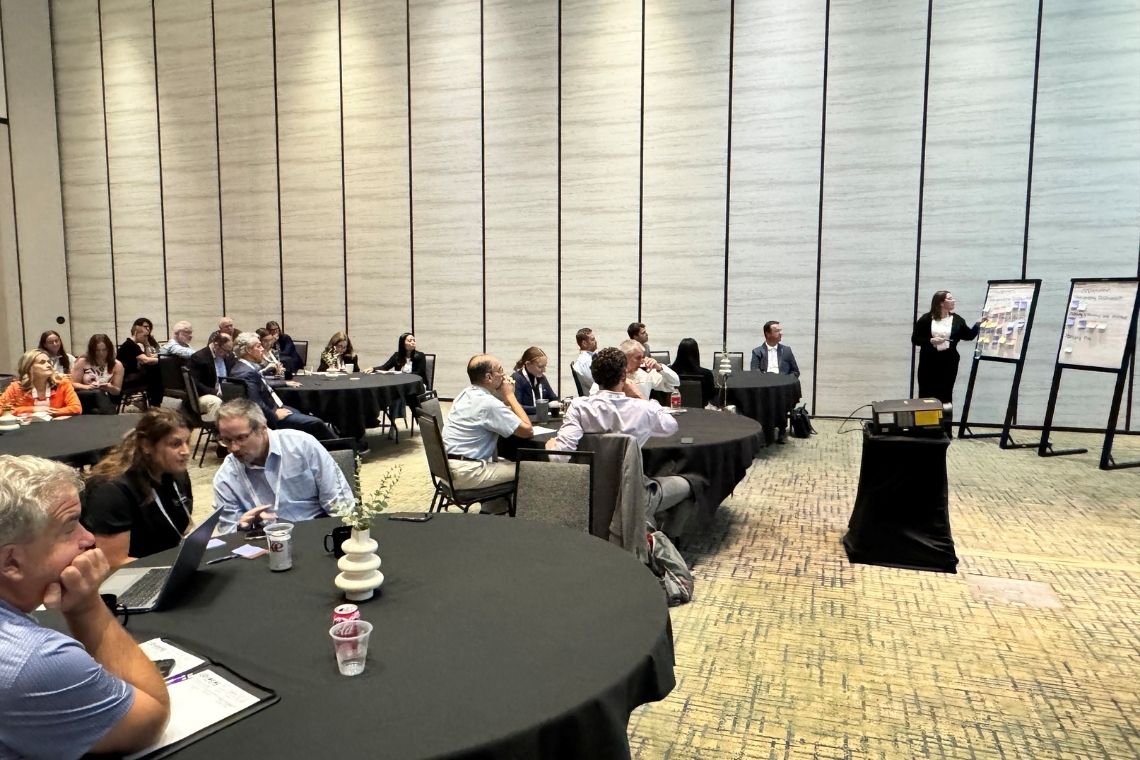
Panelist Christina Ross of Pacific Gas & Electric, presented how a Transformer Resale Pilot Project involving refurbishing, redeploying, and recycling equipment is generating revenue, avoiding new procurement, shortening lead times, and reducing waste. The utility saved the costs of scrapping old transformers and created savings that ultimately supported customer affordability.
Panelist Tina Chrisafis of Con Edison highlighted the importance of clean, transparent data and the foundation it lays for utilities to recover investments from surplus and end-of-life assets. Establishing systems that maintain accessible, accurate data is also a critical first step to successfully leverage artificial intelligence tools.
Con Edison’s Investment Recovery program has generated $75 million in value through recycling, remanufacturing, and selling surplus assets since 2021. It also diverted 82 million pounds of material from the landfill.
Utility leaders encouraged suppliers to prioritize progress over perfection in their sustainability journeys and to start with small, practical efforts. They also emphasized the importance of ongoing conversations between utilities and suppliers because each utility has unique perspectives and challenges.
Charlotte Tubbs is Beta’s Account-Based Marketing Manager and the Materials Supplier Representative on the SSCA Supplier Advisory Board through 2028. She has been with Beta Engineering for more than a decade and has extensive EPC supplier and sustainability experience, including eight years with the energy-efficient building magazine High Performing Buildings. As part of Beta’s Marketing and Communications team, she has received top-tier international, regional, and state recognition for her work, including non-profit fundraisers, tradeshows, and marketing campaigns.
Beta Engineering, a substation EPC company based in Pineville, La., performs projects across the U.S. For more than 50 years, utilities, renewable developers, and other power delivery companies have trusted Beta Engineering to help design and build the substations and switchyards that keep their systems reliable and ready for what’s next.
Updated:
October 12, 2026
Updated:
Originally Published:
PHOENIX – For many people, the topic of sustainability may bring to mind solar farms, reduced emissions, and environmental conservation measures. At this year’s Sustainable Supply Chain Alliance (SSCA) Conference, though, local spend, risk management, and ROI took center stage.
As utilities grapple with skyrocketing demand and mounting pressure to keep rates affordable for customers, it’s more important than ever to find efficiencies and identify potential problems before they occur. That’s why utilities are increasingly treating sustainability not as a siloed effort, but as an essential part of risk management to ensure an affordable, reliable, and resilient grid, said utility leaders at the 2026 SSCA Conference in Phoenix Sep. 30–Oct. 1.
The annual event brings together utility procurement leaders and suppliers for candid conversations about utility sustainability goals and supplier strategies that advance those goals while also delivering business value. The SSCA is a non-profit organization of utilities and suppliers that work together to advance sustainable practices in utility supply chain networks. It also manages a data collection tool that 30+ utilities use to collect environmental, sustainability, and governance metrics and data from 2,500 supplier companies.
Major themes of the two-day conference included measuring sustainability return on investment, supplier transparency, and increasing prioritization of local spend. Utilities in New York and California are implementing sustainability measures in their supplier evaluations and contracts, while other utilities are gathering metrics from their suppliers to evaluate supply chain risk.
Panelist Lisa Thomas of Arizona Public Service said that while the words have shifted to describe her efforts—from sustainability to risk management—the work remains the same: building a reliable supply chain.
“Nothing has changed,” Thomas said. “We need reliable suppliers, materials on time, to know what’s going to happen with the material once it goes out of service, to make sure the supply chain is efficient, and to know that we are getting the best price at the best quality.”
Panelists also noted that the scope of sustainability is expanding beyond environmental impacts to incorporate human rights, geopolitical exposure, cybersecurity, operational continuity, and material sourcing.
Utilities and suppliers also shared case studies detailing how they are advancing sustainability and demonstrating return on investment.
Panelist Christina Ross of Pacific Gas & Electric, presented how a Transformer Resale Pilot Project involving refurbishing, redeploying, and recycling equipment is generating revenue, avoiding new procurement, shortening lead times, and reducing waste. The utility saved the costs of scrapping old transformers and created savings that ultimately supported customer affordability.
Panelist Tina Chrisafis of Con Edison highlighted the importance of clean, transparent data and the foundation it lays for utilities to recover investments from surplus and end-of-life assets. Establishing systems that maintain accessible, accurate data is also a critical first step to successfully leverage artificial intelligence tools.
Con Edison’s Investment Recovery program has generated $75 million in value through recycling, remanufacturing, and selling surplus assets since 2021. It also diverted 82 million pounds of material from the landfill.
Utility leaders encouraged suppliers to prioritize progress over perfection in their sustainability journeys and to start with small, practical efforts. They also emphasized the importance of ongoing conversations between utilities and suppliers because each utility has unique perspectives and challenges.
Charlotte Tubbs is Beta’s Account-Based Marketing Manager and the Materials Supplier Representative on the SSCA Supplier Advisory Board through 2028. She has been with Beta Engineering for more than a decade and has extensive EPC supplier and sustainability experience, including eight years with the energy-efficient building magazine High Performing Buildings. As part of Beta’s Marketing and Communications team, she has received top-tier international, regional, and state recognition for her work, including non-profit fundraisers, tradeshows, and marketing campaigns.
Beta Engineering, a substation EPC company based in Pineville, La., performs projects across the U.S. For more than 50 years, utilities, renewable developers, and other power delivery companies have trusted Beta Engineering to help design and build the substations and switchyards that keep their systems reliable and ready for what’s next.
Related Services:


