
Updated:
Originally Published:
Pineville, La. — Every worker who steps onto a jobsite is someone's family member, friend, or neighbor. For utilities and power providers, protecting those workers is a responsibility that shapes every phase of a successful substation project.
This National Safety Month, Beta Engineering is spotlighting how its safety-first culture helps clients uphold that responsibility by protecting workers, reducing risk, and keeping critical infrastructure projects moving forward safely.
The Beta team has completed over 2 million work hours without a single lost time incident and has a three-year record of zero OSHA recordable incidents. Beta’s Experience Modification Rate (EMR) currently stands at 0.69—30% below industry average.
Each year, Beta’s safety team looks for ways to continuously improve Beta’s safety program, from putting new safety plans into place and expanding opportunities to earn safety certifications to offering companywide educational sessions on site best practices.
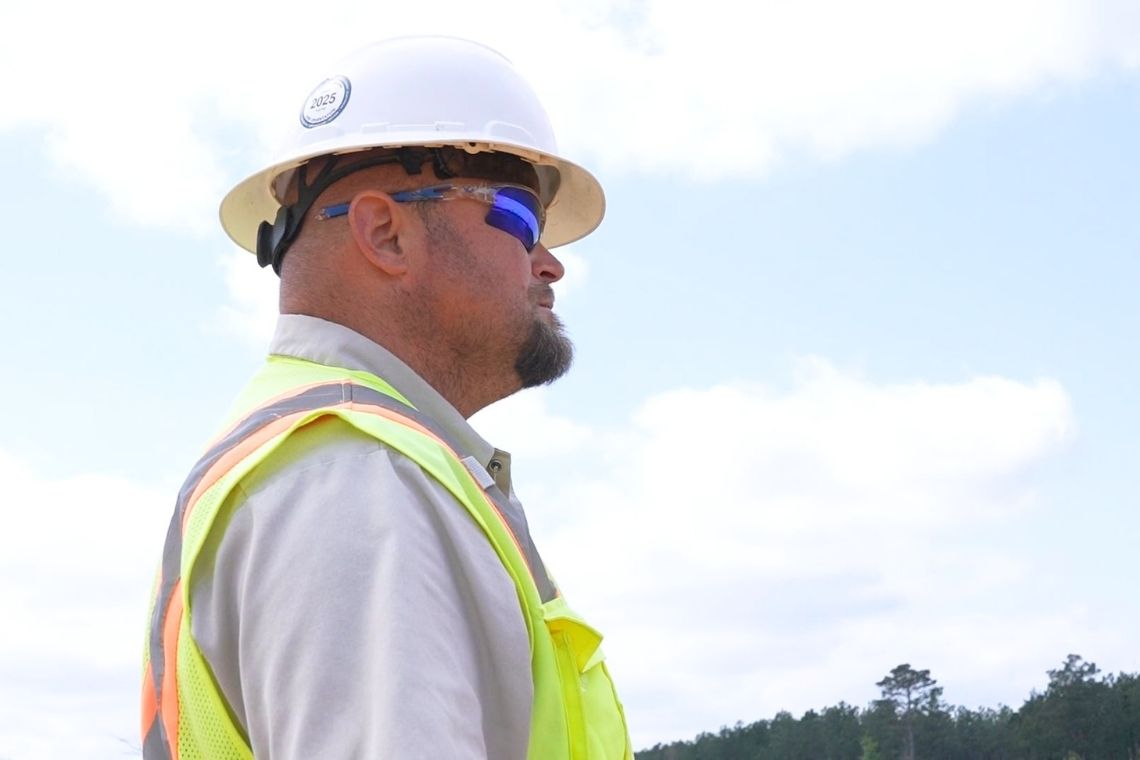
“Safety starts from the very beginning. That's where we set the expectations of having a safe site,” says Beta Site Safety Specialist Chance Willis, COSS, COSM, CHST, CSHO. “And then from there to ensure their safety, it's the constant presence throughout the day to show them that we’re still here—we're ensuring that you're still following those policies and that they’re not just talked about at the beginning of the day.”
Building a safety culture is a team effort. As an EPC contractor, Beta oversees the safety of its subcontractors and vendors at each construction site. Beta construction managers and site safety specialists lead daily tailboard meetings, complete job hazard analysis reports, and monitor construction activities. The Beta safety team also tracks contractor TRIRs, which in 2024 and 2025 were less than 0.04, placing them in the top tier for industry safety performance.
“At Beta, we are committed to providing experienced, qualified safety professionals who lead the way in ensuring every project is executed safely and efficiently—with safety integrated into every phase of our work, from the earliest planning through project completion,” says Erik Lee, Beta’s Corporate Safety Manager. As the head of Beta’s safety department, Lee said he considers his top responsibility to be building and sustaining a caring, safety-first culture that supports Beta’s safety vision, where “safety is more than compliance; it is our commitment to our people, our customers, and the successful execution of every project.”
EMR (Experience Modification Rate) is a standardized safety metric based on a company’s workers’ compensation claims history. Insurance carriers use it as a signal of risk and reliability. An EMR of 1.0 represents the industry average. Lower numbers indicate a better-than-average safety record.
Beta Engineering is a substation EPC company headquartered in Pineville, La, with an office in San Diego. Since 1975, we’ve helped power delivery companies across the U.S. complete high-voltage substation and transmission line projects. Contact our team to tap into 50 years of problem-solving experience—and a proven commitment to safety.
Updated:
June 3, 2026
Updated:
Originally Published:
Pineville, La. — Every worker who steps onto a jobsite is someone's family member, friend, or neighbor. For utilities and power providers, protecting those workers is a responsibility that shapes every phase of a successful substation project.
This National Safety Month, Beta Engineering is spotlighting how its safety-first culture helps clients uphold that responsibility by protecting workers, reducing risk, and keeping critical infrastructure projects moving forward safely.
The Beta team has completed over 2 million work hours without a single lost time incident and has a three-year record of zero OSHA recordable incidents. Beta’s Experience Modification Rate (EMR) currently stands at 0.69—30% below industry average.
Each year, Beta’s safety team looks for ways to continuously improve Beta’s safety program, from putting new safety plans into place and expanding opportunities to earn safety certifications to offering companywide educational sessions on site best practices.
“Safety starts from the very beginning. That's where we set the expectations of having a safe site,” says Beta Site Safety Specialist Chance Willis, COSS, COSM, CHST, CSHO. “And then from there to ensure their safety, it's the constant presence throughout the day to show them that we’re still here—we're ensuring that you're still following those policies and that they’re not just talked about at the beginning of the day.”
Building a safety culture is a team effort. As an EPC contractor, Beta oversees the safety of its subcontractors and vendors at each construction site. Beta construction managers and site safety specialists lead daily tailboard meetings, complete job hazard analysis reports, and monitor construction activities. The Beta safety team also tracks contractor TRIRs, which in 2024 and 2025 were less than 0.04, placing them in the top tier for industry safety performance.
“At Beta, we are committed to providing experienced, qualified safety professionals who lead the way in ensuring every project is executed safely and efficiently—with safety integrated into every phase of our work, from the earliest planning through project completion,” says Erik Lee, Beta’s Corporate Safety Manager. As the head of Beta’s safety department, Lee said he considers his top responsibility to be building and sustaining a caring, safety-first culture that supports Beta’s safety vision, where “safety is more than compliance; it is our commitment to our people, our customers, and the successful execution of every project.”
EMR (Experience Modification Rate) is a standardized safety metric based on a company’s workers’ compensation claims history. Insurance carriers use it as a signal of risk and reliability. An EMR of 1.0 represents the industry average. Lower numbers indicate a better-than-average safety record.
Beta Engineering is a substation EPC company headquartered in Pineville, La, with an office in San Diego. Since 1975, we’ve helped power delivery companies across the U.S. complete high-voltage substation and transmission line projects. Contact our team to tap into 50 years of problem-solving experience—and a proven commitment to safety.
Related Services:


