

Updated:
Originally Published:
Updated:
May 18, 2026
________________________________________________________________________________________________
“What lead times are you seeing for transformers and breakers?” It’s a familiar question you’ve probably asked and answered often. And the answer is getting depressing. What used to be measured in months has now turned into years.
Long lead times for high‑voltage substation equipment have become one of the most persistent risks facing utilities and energy infrastructure developers. Power transformers and circuit breakers are subject to manufacturing backlogs driven by global demand, supply‑chain disruptions, and limited production capacity due to a shortage of experienced labor and space constraints within manufacturing plants. Without proactive planning, these delays can cascade into missed energization dates, increased carrying costs, and regulatory challenges.
While lead times may not be entirely within a project team’s control, proven strategies can significantly reduce schedule risk. By ordering early, leveraging vendor relationships, and designing projects around more readily-available equipment, owners and EPC teams can keep substation and switchyard projects moving forward—even in tight markets.
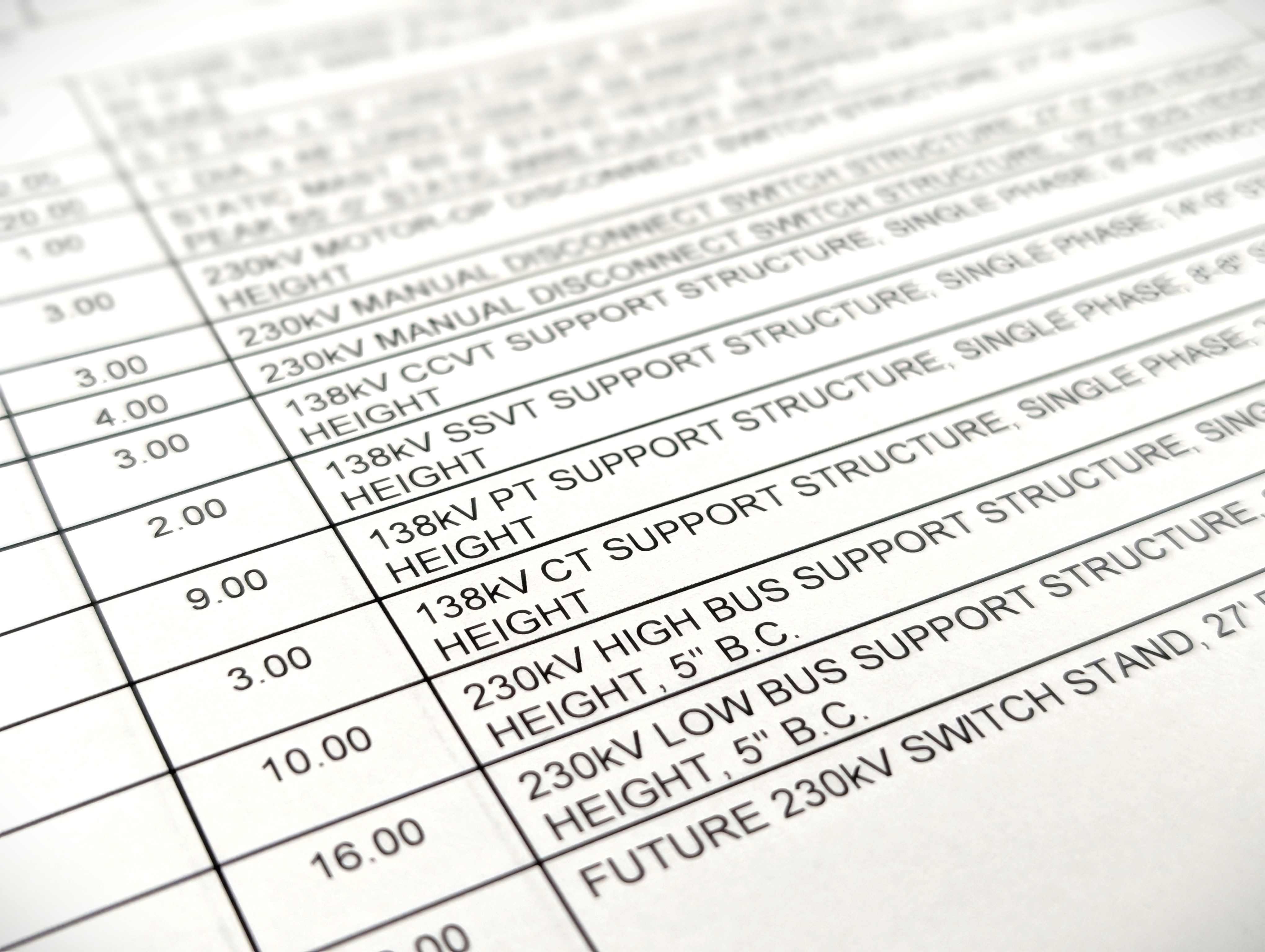
Before any procurement or schedule protection strategy can succeed, projects must begin with a well developed and accurate material list.
An accurate material list defines what long lead items are required, in what quantities, at what ratings, and on what timeline. It’s the foundation on which equipment procurement, manufacturing slots, and construction sequencing are built.
When a material list is incomplete or inaccurate, procurement teams may:
Each of these issues can force re quoting, redesign, or re manufacturing—often resetting lead times that were previously secured. And while it may seem minor, frequently returning to vendors for re-quotes creates friction and frustration—hurting your ability to leverage these critical relationships (more on that in Step 3).
In today’s supply constrained environment, even minor corrections can add months to a substation schedule. Developing and validating the material list early—ideally alongside system studies and preliminary design—means more predictable long lead procurement schedules.
The single most effective way to manage long lead times is to commit to major equipment earlier in the project lifecycle.
Providing early funding authorization for long‑lead items—such as high-voltage power transformers and circuit breakers—allows equipment vendors to lock in pricing and delivery windows. This approach shifts procurement from a reactive task to a deliberate schedule‑protection strategy. Even if overall project funding has not yet been fully released, carving out capital for major equipment can prevent months of downstream delay.
Equipment quotes and stated lead times are only valid at the time they are issued. In today’s environment, manufacturers frequently revise lead times and pricing due to changes in raw material costs, labor availability, and order volume. If a quote is not backed by a down payment or purchase order, those terms can change—sometimes in a matter of weeks. Acting quickly to convert quotes into orders is essential to preserve both schedule certainty and budget predictability.
A Limited Notice to Proceed (LNTP) with an engineering, procurement, and construction partner—such as Beta Engineering—can be a powerful tool to accelerate procurement without committing to full project execution. An LNTP enables early equipment ordering while design and permitting continue in parallel, reducing the overall project timeline without increasing risk unnecessarily.
Even with early ordering, teams should realistically expect potential schedule slippage. Many equipment manufacturers are operating at capacity, and production queues can introduce two‑ to three‑month delays beyond initial estimates. Building this contingency into the project schedule—and communicating it clearly to stakeholders—helps avoid last‑minute surprises.
Strong vendor engagement can often uncover opportunities that are not visible in standard lead‑time quotations.
While approved vendor lists play an important role in maintaining quality and reliability, rigid adherence can limit procurement options during supply shortages. Expanding the pool—where standards and specifications allow—to include additional qualified manufacturers can reduce lead‑time exposure. In some cases, alternate vendors may have open production slots or compatible designs that meet performance requirements with minimal adjustment.
Manufacturers typically publish conservative, “worst‑case” lead times to manage expectations. However, these are not always fixed. By engaging directly with vendors and following up after initial quotes, project teams can ask whether earlier delivery windows are possible, whether partial shipments are available, or whether similar equipment is already in production. Since order status and production schedules can change daily, persistence and timing can make a significant difference.
Established manufacturers offer proven reliability, deeply documented performance histories, and greater familiarity with domestic utility standards. However, they are often the most impacted by high demand. Newer suppliers may offer shorter lead times and competitive pricing but can introduce risks related to quality assurance, logistics, spare parts availability, and long‑term support.
Successful procurement strategies weigh these advantages and risks carefully. In some cases, a mixed approach—using established manufacturers for critical assets and newer suppliers for less complex components—can balance reliability with schedule needs.
Smart design decisions made early in the project can significantly reduce exposure to long lead times.
Higher‑voltage and custom‑rated equipment typically carries the longest lead times due to limited manufacturing capacity and design requirements beyond manufacturers’ established production templates. Where system studies and operational needs allow, selecting more common equipment—such as a 69kV transformer instead of a 138kV or 230kV unit—can dramatically improve availability and shorten delivery schedules.
Standard designs, ratings, and configurations are easier for manufacturers to produce and often align with existing production lines. Custom features, special impedance requirements, or non standard physical dimensions may offer marginal operational benefits but can add months to equipment delivery. Standardization across a utility’s substation portfolio also improves stocking strategies and long‑term maintenance efficiency.
Close coordination between engineering and procurement teams ensures that design choices support realistic delivery timelines. By incorporating lead‑time considerations into single‑line diagrams, equipment specifications, and layout decisions, project teams can avoid late‑stage redesigns driven by procurement constraints.
Equally as important as ordering the right material and equipment is successfully receiving and managing it once it arrives.
Having the correct transformers, breakers, and components on order does not benefit the project if those materials cannot be located, preserved, or installed when needed. Effective material management is an essential—but often underestimated—component of project success.
High voltage equipment frequently arrives months before installation. Without clear processes and procedures, projects risk:
A misplaced control cabinet, bushing, or accessory kit can halt the installation of major equipment and cancel out the benefits of early procurement.
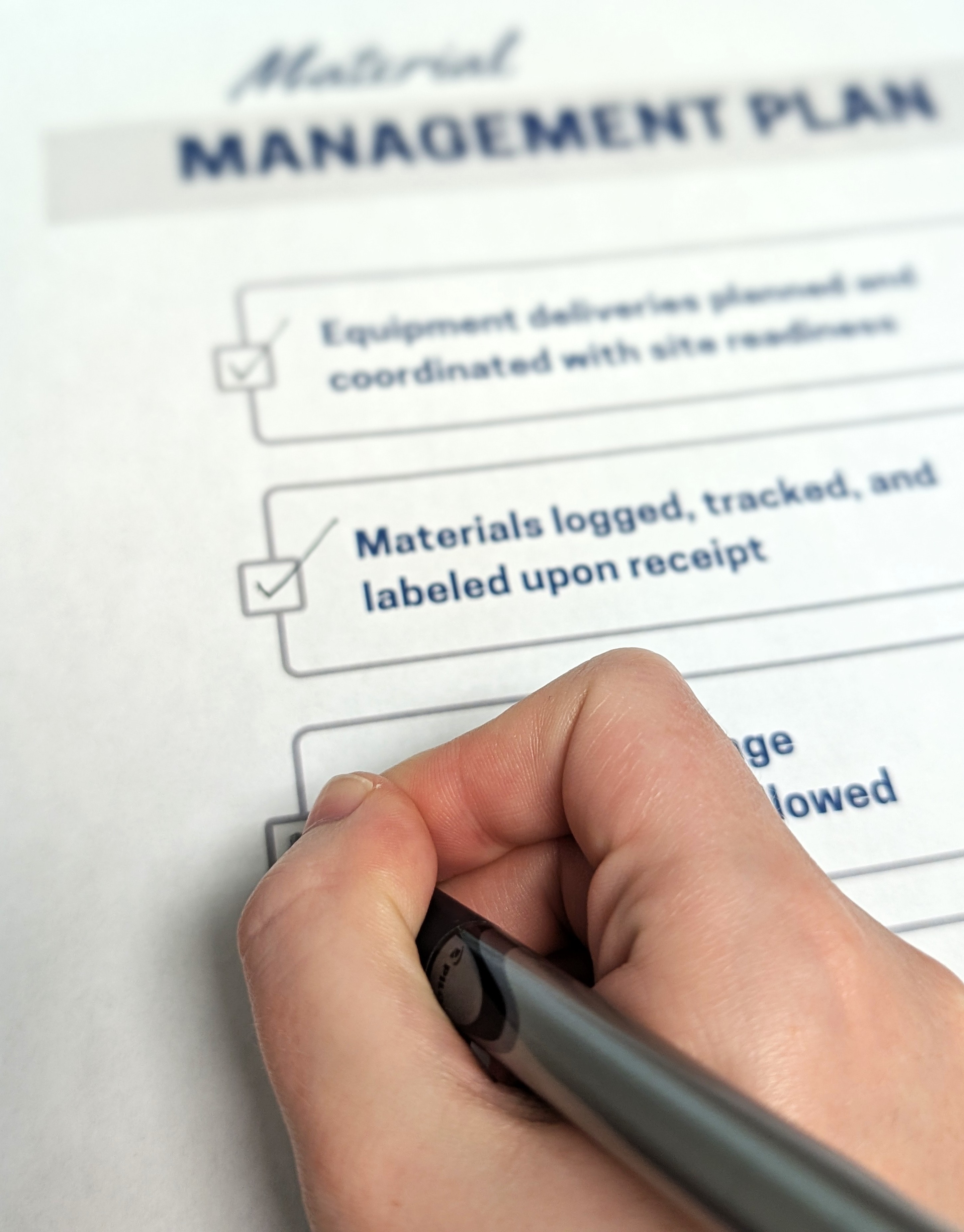
Successful projects ensure that:
Strong material management ensures that when construction activities are ready to proceed, the right equipment is available, accessible, and in good condition.
Long lead times are likely to remain a defining challenge for substation and switchyard projects for the next few years. However, proactive planning, flexible procurement strategies, and thoughtful design can transform lead‑time risk into a manageable project variable.
By starting with an accurate material list, ordering early, leveraging vendor relationships, designing around readily-available components, and effectively managing materials on site, utilities and grid infrastructure developers can keep projects on track, protect budgets, and deliver reliable power systems when they’re needed most.
Beta Engineering is a substation EPC company headquartered in Pineville, La., with an office in San Diego. Since 1975, we’ve helped utilities, renewable developers, and other power delivery companies across the U.S. complete high-voltage substation and transmission line projects.


